


ROUSSEL Jimmy
Send an email
ZINCK Sébastien
Send an email
DEDOVA Zuzana
Send an email
CHOCHOIS Laurène
Send an email
PLATTES Mario
Send an email
BERTUCCI Marie
Send an email
LEMAIGRE Sébastien
Send an email
PETUCCO Claudio
Send an email
HEROLD Malte
Send an email
RODERICH Marie-Sophie
Send an emailSanitation units based on foam media: Re-cycling of local post-consumer packaging for sustainable wastewater purification

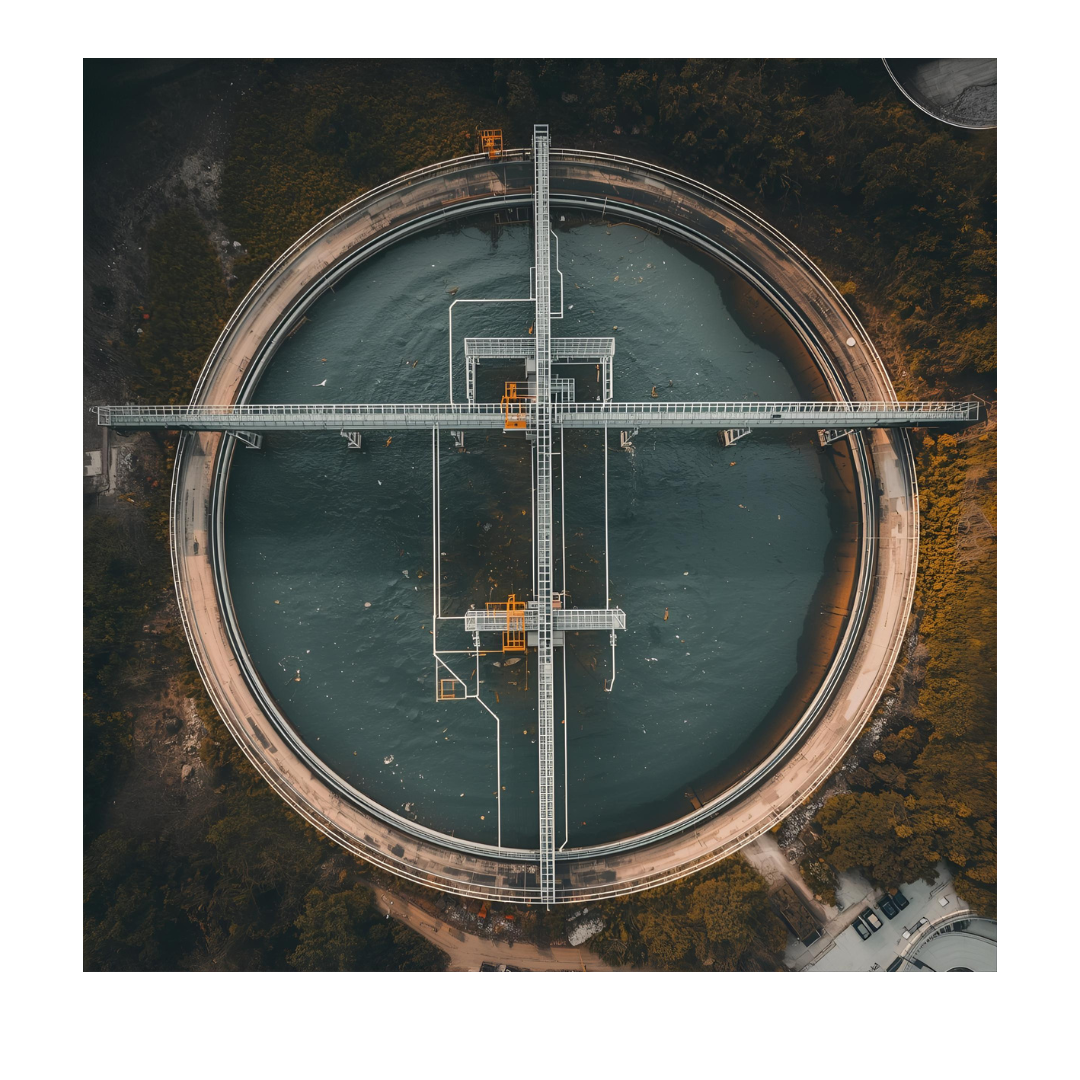
The project is inspired by the dual challenge of treating wastewater in decentralized contexts and addressing the low circularity of plastic waste, particularly flexible plastic films used in packaging. In areas without centralized sewers, there is a growing need for compact, efficient treatment systems that can guarantee high effluent quality while remaining affordable, robust and easy to operate for small residential and commercial users. At the same time, plastic film waste streams remain under recycled, representing a missed opportunity to create local circular value chains and reduce greenhouse gas emissions from both media production and plastic waste management.
The main project challenges are the design of a recycled plastic foam medium that matches or exceeds the hydraulic, filtration and biofilm support performance of existing media; validating its treatment efficiency from lab scale up to full scale systems under variable real world loads; and ensuring long term mechanical stability and recyclability across multiple use cycles. In parallel, establishing a local plastic film recycling value chain requires coordinating multiple industrial actors, proving the economic and logistical feasibility in a small country, and demonstrating, through robust sustainability and circularity assessments, that the new value chain outperforms current linear practices.
The Submersion project will develop and validate a new biofiltration medium made from recycled plastic foam derived from post consumer packaging films, specifically engineered to replace conventional mineral media in decentralized wastewater treatment units. The work spans material selection and compounding, optimization of foam structure and geometry to maximize specific surface area and porosity, and iterative testing in lab scale reactors to achieve high removals of organic matter and suspended solids under realistic operating conditions. In parallel, the project will design and demonstrate a local, circular recycling value chain that turns a largely under recycled plastic waste stream into a high value functional product, supported by life cycle sustainability and circularity assessments to quantify environmental and economic benefits versus current solutions.
The project is innovative by combining advanced material design for biological treatment with territorial circular economy implementation, moving beyond “drop in” media substitution to a fully circular, localized value chain for plastic films. LIST plays a central role by leading the scientific and methodological work: characterizing the new medium and its biofilm behaviour, designing and operating laboratory and pilot scale reactors, and developing integrated life cycle and circularity models that guide the optimization of both the product and the value chain. Through this multidisciplinary contribution, LIST ensures that the innovation is not only technically robust and high performing, but also demonstrably more sustainable, scalable, and transferable to other bioprocesses and recycling chains.
The submersion project will deliver a new recycled plastic foam medium validated from lab scale to full scale decentralized wastewater systems, along with technical guidelines for its design, operation and end of life management. In addition, it will produce an operational blueprint for a local recycling value chain for plastic films, supported by life cycle sustainability and circularity assessment models and a decision support tool that can be reused for other materials and sectors.
For industry, this technology can reduce media production costs, lower greenhouse gas emissions, and improve supply chain resilience by sourcing secondary raw materials locally, while offering equal or better treatment performance compared with conventional mineral media. Real life applications range from individual and small community sanitation units to other biological reactors where fixed biomass growth and filtration are needed, enabling wider uptake of circular, high performance media in environmental biotechnology and beyond. For the Luxembourgish ecosystem, the project fosters economic growth by leveraging Luxembourg-based partner companies for local production and processing. It opens new avenues for recycling plastic film waste by establishing a complete local value chain—from household collection to compounding and foaming—reducing waste export, incineration, and landfill use, and serving as a model for other under-recycled plastics to enhance resource resilience and align with national zero-waste goals.