CONNECTIVITY
Contributions and dynamics of pesticide loads from riparian crop fields in the Luxembourg Sandstone catchment Kielbach
View more


Investigating the dynamics of nitrogen and TFA input and release to groundwater in agricultural soils following organic amendments
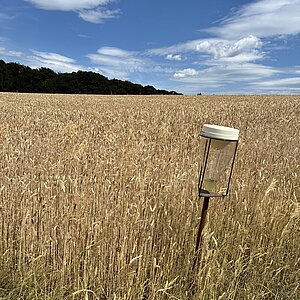
Trifluoracetic acid (TFA) is a ubiquitous pollutant of groundwater resources with a range of 500- 5000 ng/L. Its origins are multiple with atmospheric input through precipitation being a main one: F-gases used in air-conditioning are degraded by sunlight in the atmosphere to TFA which is washed out through precipitation. Current weighted annual average concentrations in rainwater is around 500 ng/L. Precipitation on its own therefore does not explain concentrations in groundwater larger than 500 ng/L. Pesticides containing CF3 moieties have been suspected to contribute to groundwater pollution with TFA. The main suspects in Luxembourg would be the largely used compounds Flufenacet and Diflufenican (black grass treatment in fall). However, a first study investigating the impact of agriculture on TFA levels in groundwater, showed a significant relationship between nitrate (as an agricultural activity indicator) and TFA concentrations but stable metabolites of both pesticide compounds were absent (see attached poster). Use profiles from national statistics and restrictions in drinking water protection zones are also not supporting pesticides as an important source in current groundwater samples. From literature it is known that plants can accumulate TFA with a factor 200-400 and a possible source is therefore the return of TFA in dung from forage fed to cattle. A few samples in organic amendments in Germany also suggested high levels of TFA. The variable TFA concentrations therefore could be the consequence of different intensities of use of organic amendments in drinking water protection zones.
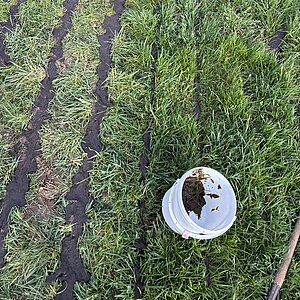
This project investigates the levels of TFA in soils of different cultures (maize, cereals, grassland) over an entire year on 10 plots in drinking water protection zones of the Luxembourgish Sandstone. Soils are sampled very 2 weeks with a parallel monitoring of carbon and nitrogen levels, including nitrate availability. Upon organic amendments (dung, manure) these are also collected from the fields and analysed for TFA. In addition, precipitation is measured at every plot.
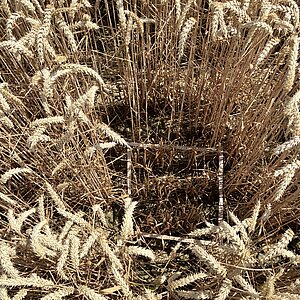
Before harvest the crops will be collected and analysed for the accumulation of TFA. The goal is to provide the data for a full modelling of the cycling of TFA through soil, plants and return through dung. Soils will also be investigated for residues of pesticides that could be precursors of TFA.
The project is part of the national strategy on PFAS surveillance and is expected to deliver data on the agricultural soil pollution by TFA and its leaching and presence in the food-dung cycle. It is an important keystone in the measures that will be taken to mitigate TFA emissions to ground water.